Showing posts with label María. Show all posts

Thursday, 19 January 2017

The hidden nuances of English

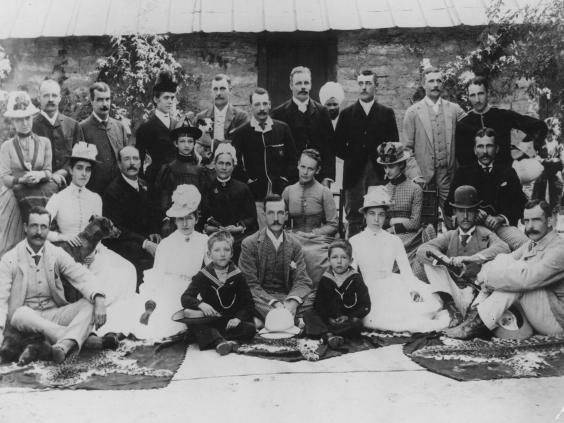
Have you ever wonder what's behind language? Surely it is no inocuous, inoffensive tool, but language can hide the whole ideology that holds a system. As English teachers we must be aware of it. English is nowadays a Lingua Franca, a global language, a means to communicate with people from many different parts of the world. But we mustn't forget that it was once and it still is an imperial language. During the 19th and beginning of the 20th century, Great Britain had many colonies, it was an Empire. One of these colonies was India, where the British first arrived with the East India Company:


The brits didn't just exploit different territories and extract their goods, but with their arrival  they also brought their language. India was one of its most important sources of wealth. At the turn of the 19th century, the British, overconfident with the Industrial Revolution, began to think that they needed to change India: values, superstitions... During the second half of the 18th century the English get involved in Indian politics. 

Resultado de imagen de east india companyAlthough showing resistance, in the end Indians are defeated, crushed and there is a switch in power from the East Indian Company to the British Crown. In 1858, with the Indian Mutiny, starts the British Raj, which is the period of British Sovereignty and it will last until 1946 when they will achieve independence. Throughout these years of power, the English brought not only their traditions and values, but also their language. Such has been its influence, that even nowadays, English is still one of the official languages in India. Although some may argue that the British brought many improvements and enhanced the lifestyle of the Indian, they also exerted their power to such extent that even nowadays it is materialised in the diglossic situation among its languages. 
Imagen relacionada
By diglossia we understand a situation in which two dialects or languages are used by a single language community, an everyday or vernacular language variety -the "low" variety-, and a second, highly codified variety, often considered "high", which is used for more formal contexts. In such situation, English still prevails as the "high" language, synonym with having received an education and thus having economic capital. When teaching English we must bear these aspects in mind, and teach it as global language, but also as a powerful system of oppression.


Resultado de imagen de english oppression of india

Wednesday, 18 January 2017

SOME OF THE PICTURES TAKEN WHILE WE WERE WORKING ON OUR BLOG...


AFTER WORKING ON THE BLOG FOR MANY HOURS...


WE HAVE WORKED A LOT...IT HAS BEEN A GREAT EXPERIENCE...


Thursday, 12 January 2017

History of the English Language.

Here we add a video in which the history of the history of the English language narrated in less than three minutes. The voice is recorded by a native speaker from Orlando.


Monday, 9 January 2017

Much more than RP...

Although it seems that RP is always questioned and not used as a standard accent, a recent survey has shown that native British speakers prefer RP over the rest of the accents. The survey shows a list of the 10 most popular accent in the UK. Here we add the list of those accents:

BRITAIN'S FAVOURITE ACCENTS

1. Received pronunciation (RP)
2. Edinburgh
3. Australian
4. Irish (Republic of Ireland)
5. Yorkshire
6. American
7. Geordie
8. Mancunian
9. Glaswegian
10. Welsh


For further reading and information go to:

MICHAEL RUNDLE: PLAIN SPEAKING

Thursday, 22 December 2016

Gifted Students


What do normally people think about gifted kids?

Usually, people think that gifted students are those who have high capacity and, because of that, they have many facilities which allow them to get very good marks and go beyond the rest of their classmates. The truth is that this is not always like this, in many occasions, these children are not recognized, they are viewed as students who are not interested in the subject and even there are a percentage of gifted children who have had academic failure. 

What are their real characteristics these kids have?


It is true that these children have high intellectual capacities, and this makes them gifted students but sometimes they are difficult to recognize because they are children that due to their defining characteristic, this means, due to their high capacity, they are often bored in class and they do not want to go to school because what they already know are studying. They are children very restless and curious, who ask about everything to their parents and also to their teachers. They are children who, when they have a special interest in a subject, they love to study it and learn about it, but if they do not have this interest, it is difficult to get them to focus and concentrate on this topic.

 When should teacher identify them?

When a teacher observes a child who already knows how to do something that was explained a few sessions ago and the rest of the class does not understand it yet, when a child says he does not want to go to school because he is bored because he already knows what they are studying there, when a child does not stop asking the teacher questions and even contradicts him or her... In all these situations we can be dealing with children with high capacities, sometimes they are seen as pedantic children, or lazy children because they do not want to go to school and they can even seem as rude by their way of asking and answering, but we must be careful because we may be confusing ourselves and what we have is a child with high capacities.

What type of gifted kids exist?
 They can have two types of personalities, they can be divergent or convergent. The ones that are divergent are more difficult to deal with. When they reach adolescence, they are always questioning authority and questioning any information they receive. On the other hand, the convergents have a easier adolescence, the don't stand out, they don't question everything. They normally try to please teachers with their good behaviour or simply they just behave as any other kid and it's very difficult to identify them.

                                                                                     What should teachers do?
 The first thing teachers should do is identifying those kids. After that they should create tasks that are more challenging for them. This kids have a special need, they can't be taught in the same way as the rest of their classmates. If teachers don't provide them any challenge, these kids get bored and demotivated. Nowadays, society luckily seems to have started working with kids that have difficulties and there are adjusted materials and special classes.  Nevertheless, these kids have also necessities that are completely ignored. For instance, we saw the statistics in the Comunitat Valenciana and there are very little cases reported of gifted people, when they know with certainty that there is a huge number.

Are there any associations?
Yes there are many, for instance in Valencia we have AVAST (Asociación Valenciana de apoyo al superdotado y talentoso).

Our opinion/ comments on the video La campana de gaus
The video is very interesting, since it shows the situation of gifted children in Spain. Their situation appears as something very dramatic, a great percentage of them have suffered academic failure, and they are not always detected. In addition, as we have seen in the case of Enna, schools do not always try to make things easier for them and solve their problems. The result from this, therefore,  is that gifted children cannot be developed as what they are. For us, a change at schools should change and schools and teachers should try their best so that gifted children can be developed and they can feel that they are in a good and comfortable atmosphere in their classrooms.


Building up a teacher identity: How we felt as students

Today we've decided to share our thoughts about our own experience as EFL learners.We all agree that there are good and bad techniques, and all of us have learned more under specific contexts or with a specific type of exercises. But what are these exercices?

What to do:

A relaxed atmosphere is key to encourage learning
Something very positive is the combination between the L2 and the L1 in case problems arise. We feel that the classes can be conducted in the foreign language except if some problem arises. We've all gone through this switch between languages: We would have to speak in English but we weren't pushed. So long mistakes aren't seen as something negative and the teacher acts encouragingly, students can feel at ease. If activities carried out in class are entertaining and updated, and the topics interesting, students feel encouraged and relaxed at once. Carrying out activities to do at home and then showing them to our classmates promoted collaborative work and a relaxed atmosphere.
Hanging posters
Another good technique we've come up with is that of hanging posters in the classroom with pictures of the vocabularyof the unit. The posters are displayed for two weeks approximately, so that the learning of words happens smoothly and almost unconsciously, it is just a natural consequence of seeing these posters every day. A very useful follow-up of this technique would be mentioning one of the words displayed in the posters so that students run and touch the poster (very positive for kinaesthetic learners) where the picture is. That way, students have fun while learning in a relaxed and motivated way.


Speaking in small groups

A further positive technique is small-group work, especially for speaking activities. Having an extra half-hour lesson can improve oral skills. Students would pick up a topic from a list with some questions meant to activate their background knowledge. This can be followed by a 1 or 2 minutes monologue, a speaking exam drill. A relaxed atmosphere with few students and no pressure because of marks can encourage students to engage into improvised conversations, helping in terms of fluency and providing a more 'natural environment'. 

WHAT NOT TO DO

Long lists: Long lists of vocabulary without any context whatsoever. Rewarding because of memorisig such lists or punishing because of failing to do so made students feel very uncomfortable. We memorised everything but after doing the exam we forgot what we had been learning because we only studied to pass the exam and not to improve our English.
Above all, no senseless and purposeless memorisation of lists!

In-class drills: Repeating words isn't always useful. Rather than learning English, by repeating dialogues or enacting them, students simply learned fixed structures which make no sense. It probably has to do with the fact that it isn't comprehensible input. Nonetheless, it may be useful in terms of intonation.


Wednesday, 21 December 2016

Education


Defining Education and ways to improve nowadays Education´s paradigma 


During this session we tried to define what education is paying particular attention to how education is defined by the 27.2 article of the Spanish Constitution and LOMCE. After analysing both definitions we realised that the definition included is too vague and  does not corresond to reality. This fact made us reflect and agree that there is a huge problem in Spain as education is yet not taken seriously enough. If we are in this Masters is because we respect and consider education the base of a society and  a key factor in the development of a country and its citizens. Being a teacher is not only transmitting knowledge but a compromise with your students as teachers are meant to guide student´s learning process. 

Education´s paradigma could be improved in many ways, although it isn´t an easy task because it´s the whole society´s responsability, teachers can definitely improve education in many ways. An important factor that would condition  the educational system´s sucess would be having motivated teachers who feel passionate about teaching. This kind of teacher would not only stick to a book, but would try to be flexible and understand student´s needs by introducing different methodologies and techniques that would improve student´s learning process. 

Moreover, students' engagement should be promoted in class, teachers should try to encourage them to be curious and interested in the subject. In order to do so, classes could be more practical and less theoretical, where creativity and critical thinking has an important place, and where students could learn in a relaxed and friendly atmosphere and where their opiniones and emotions are considered.  
  

We live in a technological society and the advancement of ICT´s could be also taken into account when preparing an English class. This can be done by using different learning resourcessuch as vídeos, songs, games, films or podcasts, the combination of those and others can make a class much more interactive and enjoyable for students. 

 Furthermore,  cooperative and team-work learning should also be introduced into the class, by this way students are likely to feel integrated and part of a cohesive group. Another important thing that would condition student´s sucess is to adapt materials for students with special needs and to take into account diversity inside the classroom. 

.........................................................................................................................................................

Someone who really thinks that the educational system should change is Ken Robinson. He is an international advisor on education and he believes in an educational system that nurtures rather than kills creativity. I post below one of his brilliant vídeos:  


Tuesday, 20 December 2016

Austin and Searle


  • Biography
  • Austin’s analysis of an utterance. The locution/illocution distinction
  • Searle’s response to Austin’s theory
  • Criticism of the theories

1     1.Biography

JohnLangshaw Austin (1911-1960) was born in Lancaster, England. He studied Classics in Oxford, receiving a First in Classics and Philosophy and went on to then become a Professor of Moral Philosophy at the University of Oxford after serving in the war. His work has covered a wide range of areas of philosophy, including knowledge, perception, action, freedom, truth, language, and the use of language in speech acts. What concerns us is the distinctions that Austin drew in his work on speech acts—in particular his distinction between locutionary, illocutionary, and perlocutionary acts—, which has assumed something like canonical status in more recent work. It is possible to say that all the topics he investigated are intertwined in his works, for it is from the relation between his view of truth and language, which his theory of Speech Acts arises.

On the other hand, John Searle, (1932-) is an American philosopher who currently works as Professor of Philosophy at the University of California, Berkley. He started his education at the University of Wisconsin-Madison and then attended Oxford University, where he completed his studies, and went on to work there. He is mostly known for his work in the fields of philosophy of language, philosophy of mind and social philosophy. He has received numerous awards. Within the field of philosophy, he tried to synthesise the ideas of other philosophers such as Austin and his ‘illocutionary act’, but also ideas from Ludwig Wittgenstein or from Griece, so that his work embraces ideas from many different authors. In his book Speech Acts, published in 1969 he attempts to give his own view on illocutionary act bearing in mind the ideas of these authors among others.

2. Austin’s analysis of an utterance. The locution/illocution distinction

Austin is usually correctly credited with founding Speech Act theory with his How To Do Things With Words published in 1962. Austin’s fundamental insight was that utterances not only say things but “do things”.

Austin’s analysis of an utterance

For Austin, speech acts or illocutionary acts can be analysed on three levels:
(1) A locutionary act: the saying of an utterance (making noises conforming to certain vocabulary and grammar)

(2) An illocutionary act: the force of an utterance such as informing, warning or undertaking (its intended significance as a socially valid verbal action)
(3) A perlocutionary act: the effect of an utterance, the action performed by speaking. (persuading, convincing, scaring…) (Marc Lloyd, 2007)

The locution / illocution distinction

Austin distinguished locution and illocution by pointing out that the same locution (e.g., “I am coming back” ) could be used to perform a number of different illocutions (e.g. stating, predicting, promising, encouraging, warning, questioning). Searle rejected Austin’s division between locution and illocution.

Performative utterances

An interesting type of illocutionary speech act is that performed in the utterance of what Austin calls performatives, typical instances of which are "I nominate John to be President", "I sentence you to ten years' imprisonment", or "I promise to pay you back." In these typical, rather explicit cases of performative sentences, the action that the sentence describes (nominating, sentencing, promising) is performed by the utterance of the sentence itself.
Even where Austin’s work has been challenged, rejected or revised, How To Do Things With Words continues to attract attention and has remained foundational and programmatic for speech act approaches to language use.


3. Searle’s response to Austin’s theory

Searle rejected Austin’s division between locution and illocution, rightly seeing that the meaning of an utterance is usually inextricably bound up with its force.

Searle suggested replacing Austin’s locution / illocution distinction with the alternative distinction of:
(1) utterance acts, in which the speaker utters words
(2) propositional acts, in which the speaker refers and predicates and
(3) illocutionary acts, which have a particular force.

For Searle, an illocutionary act is a function both of its propositional content and its illocutionary force and can be expressed using the notation F(p), where F is the force and p is the propositional content of reference (R) and sense (S), p=RS.


Searle introduced to speech act theory the analysis of the differences in direction of fit between words and the world in different utterances. This distinction considers whether a speaker attempts to conform his words to the world (a word to world fit, as in statements, descriptions, assertions or explanations) or the world to his words (a world to word fit, as in requests, commands, vows and promises). Though this is a useful distinction, it should be noted that every utterance affects the world by itself becoming a new fact in the world. Even if only the speaker hears his own word to world statement, he is changed by having made it.

Without a doubt, Searle’s work in this area has superseded Austin’s one. His work in the classification of illocutionary acts is a significant advance on Austin’s and has become the standard theory.

Searle also described the psychological state in the speaker or sincerity condition which is required for each type of illocutionary act, and the propositional content involved.

Searle's illocutionary acts
5 mutually exclusive and jointly exhaustive classes:

  • Assertive- the speaker becomes committed to the truth of the propositional content. Example “it is raining”
  • Directive- the speaker tries to get the hearer to act in such a way as to fulfil what is represented by the propositional content. Example “Close the door”
  • Commissive- the speaker becomes committed to act in the way represented by the propositional content. Example promising, “I will finish the paper my tomorrow”
  • Expresive- the speaker simply expresses the sincerity of condition of the illocutionary act. Example: “I’m glad it is raining!”
  • Declarative- the speaker performs an action representing herself as performing that action. Example: “I name this ship Queen Elizabeth”

4. Theories' criticism

The speech act borrows its ideas from structuralism which claims that the elements of the language are rather synchronic, they have the meaning they are given at a certain point, they don't carry historical meaning (diachronic)

While most philosophers of language had examined the dennotative meaning (the literal meaning)of words and the logic of propositions, Speech Act Theorists focus on connotations and the instrumentality of language.

Response

The theory of speech acts has had a tremendous influence on functional aspects of pragmatic theory but it has also received very strong criticism. They were criticised because:

1. They based their theory only on acoustic and momentary communication

2. They were only focussed on a very specific type of expressions and did not watch the complete reality of the linguistic communication. They didn't work on a theory of the communicative interaction

3. Very simple verbal contexts in which they apply their theory

4. Huge tendency for showing a very fragmented linguistic reality: Weinrich in 1981 criticized that speech acts shouldn't help linguistic to pack reality in boxes.

To sum up, the main critique they received was that conversation is not just a mere chain of independent illocutionary forces rather, speech acts are related to other speech acts with a wider discourse context. Speech act theory, in that it does not consider the function played by utterances in driving conversation is, therefore, insufficient in accounting for what actually happens in conversation."

Enjoying our presentation