Showing posts with label Extra Posts. Show all posts

Thursday, 19 January 2017

The hidden nuances of English

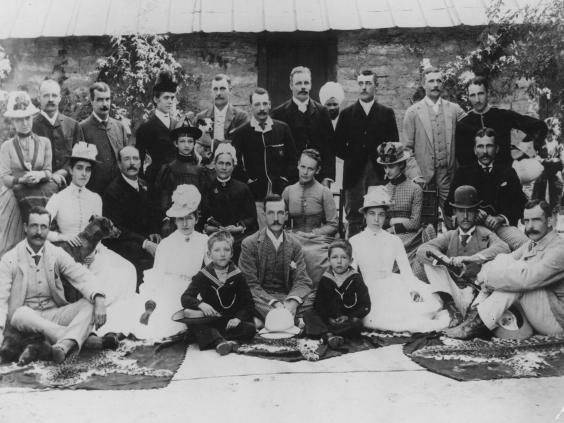
Have you ever wonder what's behind language? Surely it is no inocuous, inoffensive tool, but language can hide the whole ideology that holds a system. As English teachers we must be aware of it. English is nowadays a Lingua Franca, a global language, a means to communicate with people from many different parts of the world. But we mustn't forget that it was once and it still is an imperial language. During the 19th and beginning of the 20th century, Great Britain had many colonies, it was an Empire. One of these colonies was India, where the British first arrived with the East India Company:


The brits didn't just exploit different territories and extract their goods, but with their arrival  they also brought their language. India was one of its most important sources of wealth. At the turn of the 19th century, the British, overconfident with the Industrial Revolution, began to think that they needed to change India: values, superstitions... During the second half of the 18th century the English get involved in Indian politics. 

Resultado de imagen de east india companyAlthough showing resistance, in the end Indians are defeated, crushed and there is a switch in power from the East Indian Company to the British Crown. In 1858, with the Indian Mutiny, starts the British Raj, which is the period of British Sovereignty and it will last until 1946 when they will achieve independence. Throughout these years of power, the English brought not only their traditions and values, but also their language. Such has been its influence, that even nowadays, English is still one of the official languages in India. Although some may argue that the British brought many improvements and enhanced the lifestyle of the Indian, they also exerted their power to such extent that even nowadays it is materialised in the diglossic situation among its languages. 

Imagen relacionada
By diglossia we understand a situation in which two dialects or languages are used by a single language community, an everyday or vernacular language variety -the "low" variety-, and a second, highly codified variety, often considered "high", which is used for more formal contexts. In such situation, English still prevails as the "high" language, synonym with having received an education and thus having economic capital. When teaching English we must bear these aspects in mind, and teach it as global language, but also as a powerful system of oppression.

Resultado de imagen de english oppression of india

Wednesday, 18 January 2017

SOME OF THE PICTURES TAKEN WHILE WE WERE WORKING ON OUR BLOG...


AFTER WORKING ON THE BLOG FOR MANY HOURS...


WE HAVE WORKED A LOT...IT HAS BEEN A GREAT EXPERIENCE...


Thursday, 12 January 2017

History of the English Language.

Here we add a video in which the history of the history of the English language narrated in less than three minutes. The voice is recorded by a native speaker from Orlando.


Monday, 9 January 2017

Much more than RP...

Although it seems that RP is always questioned and not used as a standard accent, a recent survey has shown that native British speakers prefer RP over the rest of the accents. The survey shows a list of the 10 most popular accent in the UK. Here we add the list of those accents:

BRITAIN'S FAVOURITE ACCENTS

1. Received pronunciation (RP)
2. Edinburgh
3. Australian
4. Irish (Republic of Ireland)
5. Yorkshire
6. American
7. Geordie
8. Mancunian
9. Glaswegian
10. Welsh


For further reading and information go to:

MICHAEL RUNDLE: PLAIN SPEAKING

Thursday, 22 December 2016

Building up a teacher identity: How we felt as students

Today we've decided to share our thoughts about our own experience as EFL learners.We all agree that there are good and bad techniques, and all of us have learned more under specific contexts or with a specific type of exercises. But what are these exercices?

What to do:

A relaxed atmosphere is key to encourage learning
Something very positive is the combination between the L2 and the L1 in case problems arise. We feel that the classes can be conducted in the foreign language except if some problem arises. We've all gone through this switch between languages: We would have to speak in English but we weren't pushed. So long mistakes aren't seen as something negative and the teacher acts encouragingly, students can feel at ease. If activities carried out in class are entertaining and updated, and the topics interesting, students feel encouraged and relaxed at once. Carrying out activities to do at home and then showing them to our classmates promoted collaborative work and a relaxed atmosphere.
Hanging posters
Another good technique we've come up with is that of hanging posters in the classroom with pictures of the vocabularyof the unit. The posters are displayed for two weeks approximately, so that the learning of words happens smoothly and almost unconsciously, it is just a natural consequence of seeing these posters every day. A very useful follow-up of this technique would be mentioning one of the words displayed in the posters so that students run and touch the poster (very positive for kinaesthetic learners) where the picture is. That way, students have fun while learning in a relaxed and motivated way.


Speaking in small groups

A further positive technique is small-group work, especially for speaking activities. Having an extra half-hour lesson can improve oral skills. Students would pick up a topic from a list with some questions meant to activate their background knowledge. This can be followed by a 1 or 2 minutes monologue, a speaking exam drill. A relaxed atmosphere with few students and no pressure because of marks can encourage students to engage into improvised conversations, helping in terms of fluency and providing a more 'natural environment'. 

WHAT NOT TO DO

Long lists: Long lists of vocabulary without any context whatsoever. Rewarding because of memorisig such lists or punishing because of failing to do so made students feel very uncomfortable. We memorised everything but after doing the exam we forgot what we had been learning because we only studied to pass the exam and not to improve our English.
Above all, no senseless and purposeless memorisation of lists!

In-class drills: Repeating words isn't always useful. Rather than learning English, by repeating dialogues or enacting them, students simply learned fixed structures which make no sense. It probably has to do with the fact that it isn't comprehensible input. Nonetheless, it may be useful in terms of intonation.